When God Uses Weakness to Protect Us from Spiritual Pride
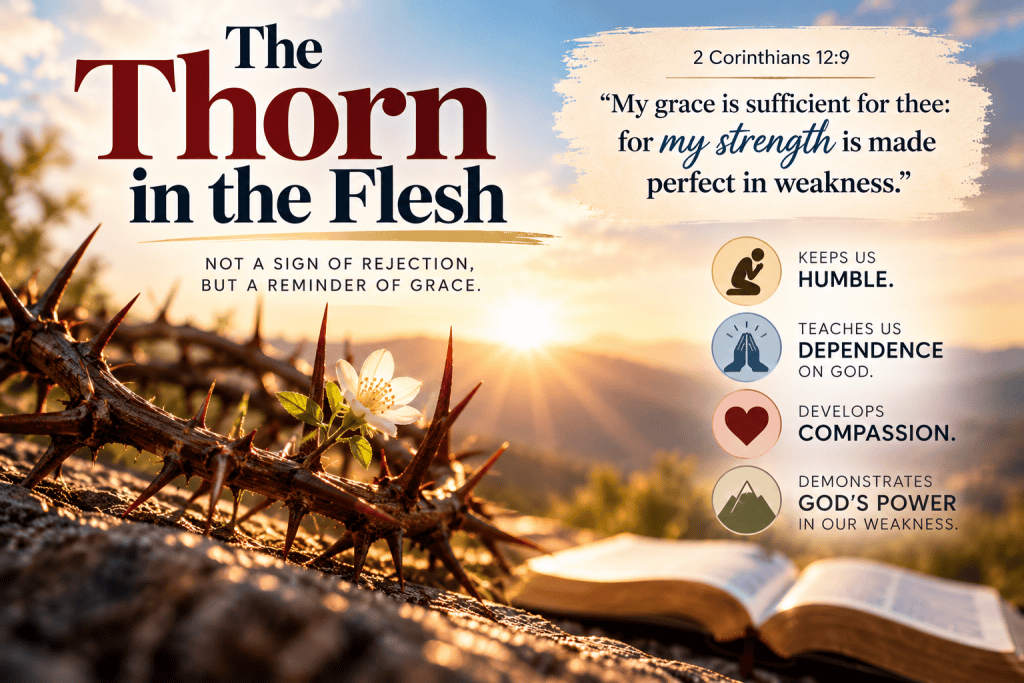
“And lest I should be exalted above measure through the abundance of the revelations, there was given to me a thorn in the flesh…” — 2 Corinthians 12:7 (KJV)
Have you ever wondered why God allowed the Apostle Paul, a man who faithfully preached the Gospel, performed miracles, and experienced extraordinary revelations, to suffer from a thorn in the flesh?
And here is an even more important question: Does God still allow a thorn in the flesh in the lives of believers today, especially pastors, evangelists, and church leaders?
I believe He can.
But perhaps we need to understand something deeper about Paul’s experience.
The Thorn Was Not Meant to Destroy Paul
Paul had experienced extraordinary spiritual revelations. Yet, despite his calling and spiritual authority, he was not exempt from weakness.
In 2 Corinthians 12:7, Paul revealed why the thorn was permitted: to keep him from becoming conceited.
Think about that for a moment.
Even the Apostle Paul, who was personally called by Jesus Christ, needed to remain humble.
He pleaded with God three times to remove the thorn. But God answered:
“My grace is sufficient for thee: for my strength is made perfect in weakness.” — 2 Corinthians 12:9 (KJV)
God did not remove the thorn. Instead, He taught Paul to depend on divine grace.
Sometimes God does not remove the difficulty because He is accomplishing something deeper within us.
Can Christian Leaders Today Experience the Same Thing?
Absolutely. God can still use persistent difficulties, weaknesses, opposition, and trials to develop humility and dependence on Him.
Christian leadership carries a particular danger: spiritual pride.
A pastor may begin with a sincere desire to serve God. But as the ministry grows, the congregation increases, and recognition follows, something dangerous can happen.
The leader may slowly begin to believe that the ministry’s success is proof of personal greatness.
Instead of depending on God, they begin depending on their influence, reputation, financial resources, or leadership abilities.
Instead of serving the congregation, they expect the congregation to serve them.
Instead of welcoming correction, they begin treating questions as rebellion.
And instead of pointing people to Jesus Christ, they gradually become the center of attention.
A successful ministry does not automatically mean a spiritually mature leader.
This is why humility matters so much.
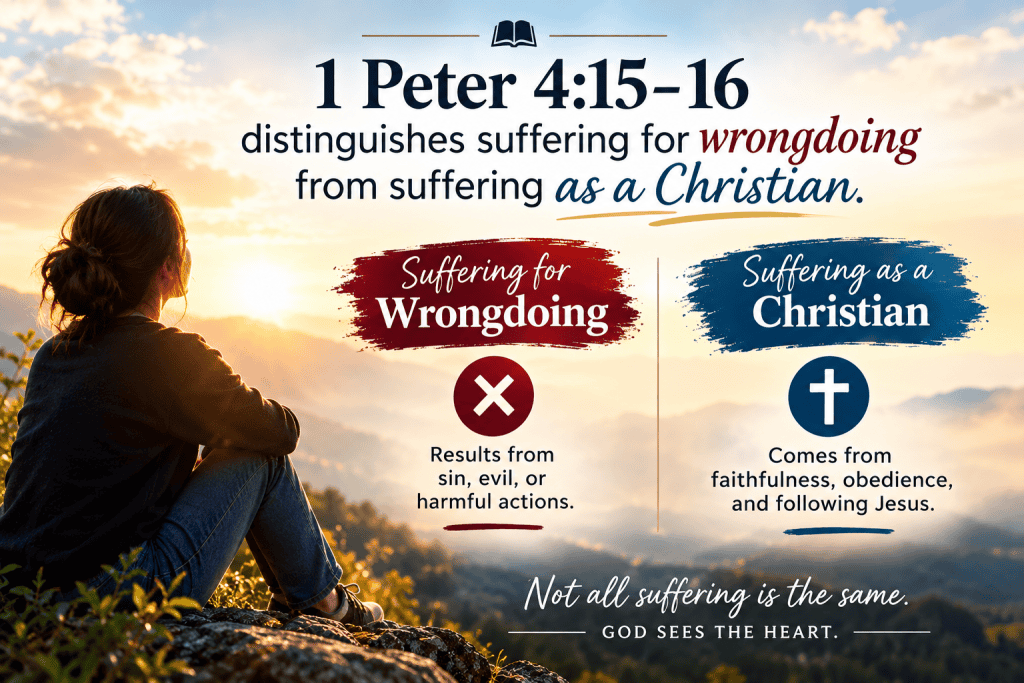
A Thorn Is Not an Excuse for Sin
We must also be careful not to confuse a thorn in the flesh with sinful character.
Some people may describe a pastor’s arrogance, dishonesty, manipulation, or abusive behavior as a personal weakness that God has allowed.
But Paul’s thorn was not permission to continue in sin.
The Bible calls Christian leaders to repentance, accountability, self-control, and godly character.
First Peter 5:3 warns leaders against exercising domineering authority over those entrusted to their care.
A genuine servant of God should never use spiritual authority to escape correction.
A thorn may expose our weakness, but it does not excuse our wickedness.
God’s Power Is Not Measured by the Size of a Ministry
Today, some churches measure success through attendance, impressive buildings, financial prosperity, social media influence, and public recognition.
But consider the Apostle Paul.
He endured suffering, rejection, persecution, hardship, and personal weakness.
Yet his ministry profoundly influenced the early Church.
Paul did not need a luxurious lifestyle or celebrity status to demonstrate God’s power.
He understood that the Gospel was not about glorifying the messenger but proclaiming Jesus Christ.
In 2 Corinthians 4:5, Paul wrote:
“For we preach not ourselves, but Christ Jesus the Lord; and ourselves your servants for Jesus’ sake.”
That should remain the foundation of Christian leadership today.
Perhaps the Greatest Danger Is Becoming Too Important to Be Corrected
One of the most dangerous conditions in Christian leadership is when a pastor begins to believe that being called by God places them above accountability.
But no spiritual title makes a person greater than the Word of God.
No amount of ministry success makes someone immune to temptation.
No congregation is so large that its pastor no longer needs humility.
And no leader becomes so anointed that repentance is unnecessary.
Paul recognized his weakness and depended on God’s grace.
Shouldn’t Christian leaders today do the same?
Final Reflection
We do not know exactly what Paul’s thorn in the flesh was. Christians have interpreted it as physical suffering, persecution, or another persistent affliction.
But we do know its stated purpose: to keep Paul from becoming conceited.
God can still use difficulties to humble His people today, although we should never assume that every illness, hardship, or opposition is a thorn specifically given by God.
Perhaps the lesson is not that every Christian leader must have a thorn.
Perhaps the greater lesson is that every Christian leader must remain humble before God.
Because the moment a leader begins to believe they are too important to be corrected, too spiritual to be questioned, or too successful to fall, they are already standing on dangerous ground.
Jesus never called His disciples to become celebrities.
He called them to become servants.
A true servant of God does not seek to be exalted above others. A true servant desires that Christ alone be exalted.
“For whosoever exalteth himself shall be abased; and he that humbleth himself shall be exalted.” — Luke 14:11 (KJV)
A Question for the Church Today
If God allowed the Apostle Paul to experience a thorn in the flesh to protect him from spiritual pride, why do some Christian leaders today act as though their calling, anointing, or ministry success places them above correction?
May we never become so impressed with the messenger that we forget the One who sent the message.
To God alone be the glory.
Called Back to God — A Call to Biblical Truth, Humility, Repentance, and Genuine Discipleship
Leave a Reply