When we read the New Testament, it is easy to view the figures surrounding Jesus as instantly faithful, polished icons. But the historical reality is far more raw, human, and dramatic.
One of the most profound, yet frequently overlooked narratives in the Bible is the intense relational tension between Jesus and His own biological family. They didn’t start out as His followers. In fact, for most of His ministry, they doubted His mission, feared for His safety, and even questioned His sanity.
Here is the untold story of Jesus’ family dynamic, the unique burden carried by His mother Mary, and the ultimate miracle that changed everything.
1. The Shock of the “Family Business” Shift
To understand why Jesus’ family struggled to believe Him, we have to look at the 18 “silent years” preceding His ministry (ages 12 to 30).
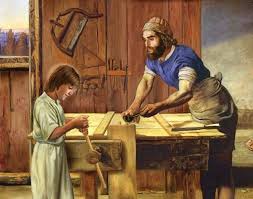
In the original Greek, Jesus and His father Joseph are described as a tekton (Matthew 13:55). This wasn’t just a simple wood-carver; a tekton was a general builder, stonecutter, and artisan. Jesus grew up working side-by-side with His younger half-brothers—James, Joseph, Simon, and Judas (Jude)—plus at least two sisters. They shared a workshop, carried heavy timber, bid on local construction projects, and sweat together to support the household.
Imagine working daily for over a decade with your ordinary older brother, only for Him to suddenly drop His tools at age 30, leave the family business, and declare Himself the fulfillment of ancient prophecy. To His brothers, this sudden shift was jarring, disruptive, and impossible to reconcile with the brother they knew.
2. When Family Doubted His Sanity
As Jesus’ public ministry exploded, drawing chaotic crowds and provoking dangerous religious leaders, His family became deeply alarmed. In an ancient Jewish culture built on family honor, Jesus’ radical actions brought immense public scrutiny to their household.
The tension reaches a breaking point in Mark 3:20–21:
“When his family heard about this, they went to take charge of him, for they said, ‘He is out of his mind.’”
The Greek phrase for “take charge of him” (kratesai auton) is an aggressive term meaning to seize by force or arrest. They didn’t travel to support Him; they traveled to stage an intervention, intending to physically drag Him away from the public eye for His own safety and the family’s reputation.
Religious leaders immediately weaponized this family crisis, claiming that if Jesus’ own relatives thought He was crazy, He must be possessed by a demon (Mark 3:22).
3. How Jesus Managed Precise Boundaries
Despite the intense cultural and emotional pressure to conform to His family’s wishes, Jesus managed His relationships with absolute precision. He loved them, but He never allowed family expectations to derail His divine timeline.
- The Boundary of Timing (John 2:1–11): When Mary pressured Him to fix a wine shortage at a wedding, He gently but firmly replied, “Woman, why do you involve me? My hour has not yet come.” He established that His miracles would be dictated by God’s clock, not parental pressure.
- The Boundary of Access (Mark 3:31–35): When His mother and brothers stood outside a crowded house demanding He come out to them, Jesus stayed put. Looking at His listeners, He declared, “Whoever does God’s will is my brother and sister and mother.” He chose His spiritual assignment over biological entitlement.
- The Boundary of Identity (John 7:1–10): When His brothers mockingly urged Him to go to a major festival to show off His miracles and gain fame, Jesus refused to cave to the peer pressure. He stayed behind, completely refusing to let skeptics dictate His ministry strategy.
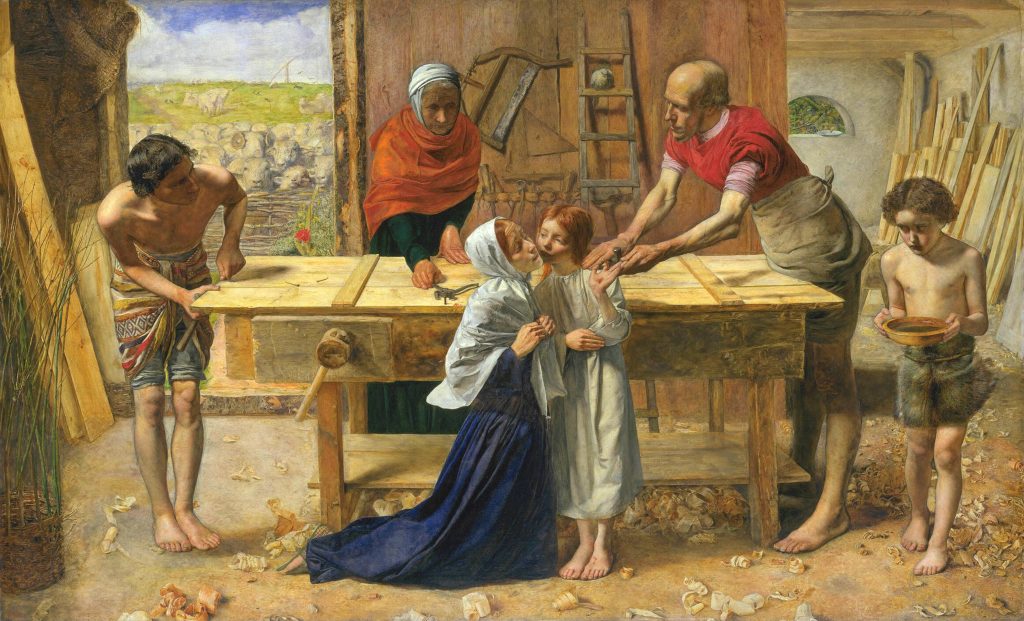
Christ In The House of His Parents(1849-50is a painting by John Everet Millais4. Mary’s Heart: The Conflict of a Mother
While Jesus’ brothers operated out of sheer skepticism, Mary’s experience was far more complex. She carried a divine secret—remembering the angel Gabriel, the virgin birth, and the prophecies spoken over Him as a baby.
Yet, watching her son live out that destiny was agonizing. When Jesus was an infant, a prophet named Simeon told Mary that a sword would pierce her own soul because of Him (Luke 2:35). During His ministry, she felt that sword. She constantly had to balance her divine knowledge with her fierce maternal instinct to protect her child from angry mobs—including the time His hometown crowd in Nazareth tried to hurl Him off a cliff (Luke 4:29).
Ultimately, Mary’s faith outlasted her fear. While His brothers stayed behind in Galilee, Mary followed Jesus to the darkest place imaginable. She did not abandon Him when the public turned; she stood faithfully at the foot of the cross, watching her firstborn die.
                  ┌──────────────────────────────┐
                  │      MARY'S COMPLEX ROLE     │
                  └──────────────┬───────────────┘
                                 │
         ┌───────────────────────┴───────────────────────┐
         ▼                                               ▼
┌─────────────────────────────────┐             ┌─────────────────────────────────┐
│        DIVINE KNOWLEDGE         │             │         MATERNAL INSTINCT       │
├─────────────────────────────────┤             ├─────────────────────────────────┤
│ • Remembered Gabriel's promise  │             │ • Saw the growing danger        │
│ • Knew He was the Son of God    │             │ • Worried for His daily safety  │
│ • Prompted His first miracle    │             │ • Suffered watching Him suffer  │
└─────────────────────────────────┘             └─────────────────────────────────┘
5. The Ultimate Turning Point: The Resurrection
If the story ended at the cross, it would be a tragedy of family estrangement. But the resurrection changed everything.
While the brothers had likely dismissed rumors of Jesus’ miracles as crowd hysteria, watching their brother be publicly executed, buried, and then seeing Him alive, breathing, and eatingthree days later was a miracle they could not deny.
The Apostle Paul explicitly records that after Jesus rose, “he appeared to James” (1 Corinthians 15:7). Jesus went directly to His most skeptical sibling. You can fool a stranger, but you cannot fool a brother who grew up sharing a room with you.
Instantly, the resurrection shattered decades of doubt:
- By Acts 1:14, just days after Jesus ascended to heaven, His mother and His brothers are listed together in the upper room, praying as core members of the early Church.
- His brother James went from a fierce skeptic to the leading apostle of the Jerusalem church, eventually facing a brutal martyr’s death for defending Jesus’ name.
- When James and Jude wrote their books of the New Testament, they completely dropped their biological pride. They didn’t call themselves “the brothers of Jesus” to gain clout. Instead, they humbly introduced themselves as “a servant of Jesus Christ.”
What Believers Can Learn Today
If you face isolation, mockery, or rejection from your own family because of your faith, the story of Jesus’ family offers profound comfort:
Hold onto hope for their transformation: Your family’s current rejection is not their final answer. The very people who knew Jesus best, and doubted Him most, became the ones most willing to die for Him because they saw Him conquer death.
Rejection doesn’t mean failure: Jesus was spiritually perfect, yet His closest blood relatives called Him insane. Family misunderstanding is often a byproduct of spiritual misalignment, not your worth.
God provides a spiritual family: When biological ties fray, God provides the church community to step into the gap as your true brothers and sisters.
Never compromise your calling for family comfort: Jesus never watered down His truth to keep the peace at home. He stayed entirely focused on His mission.
In 2002, an ancient limestone burial box (an ossuary) [1, 2] from 1st-century Jerusalem [3] was discovered with an Aramaic inscription [3] that reads: “James, son of Joseph, brother of Jesus.” [1, 3] While it sparked intense scientific debate regarding its authenticity, many leading historians believe it is a real artifact. It is highly unusual for an ancient burial box to list a brother unless that brother was incredibly famous, which perfectly matches how the early church viewed Jesus. [1]