By Florilyn Barnhart
The story of Jericho is one of the most famous accounts in the Bible. Many people remember it from Sunday school: the Israelites marched around the city, the trumpets sounded, the people shouted, and the walls came down.
But Jericho was much more than a children’s Bible story.
It was a real city. A heavily fortified stronghold. A military obstacle that stood between Israel and the Promised Land. And thousands of years later, archaeologists continue to uncover evidence that helps us better understand what happened there.
More importantly, the story of Jericho reveals a timeless truth about faith, obedience, and the power of God.
Jericho: The Gateway to Canaan
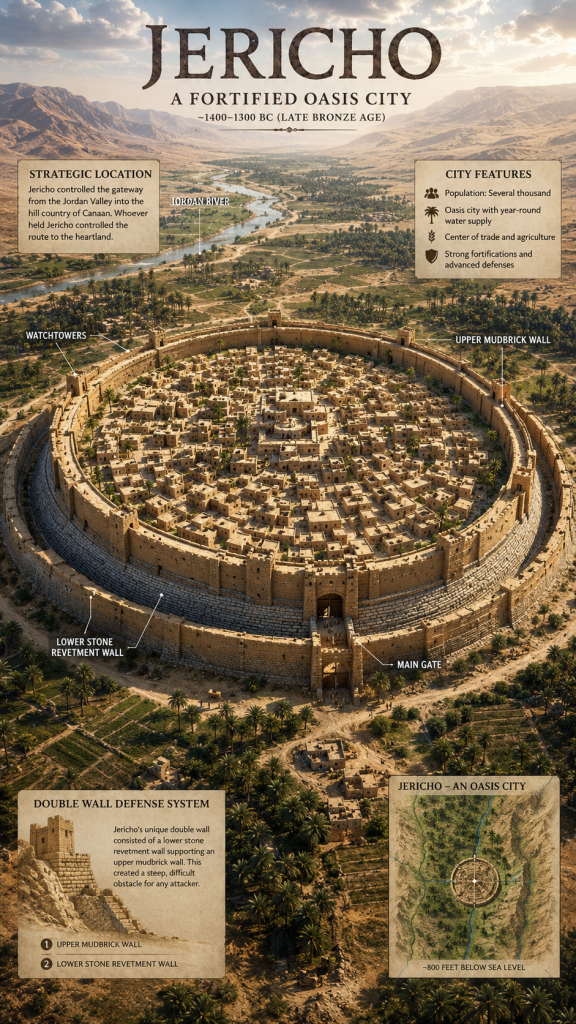
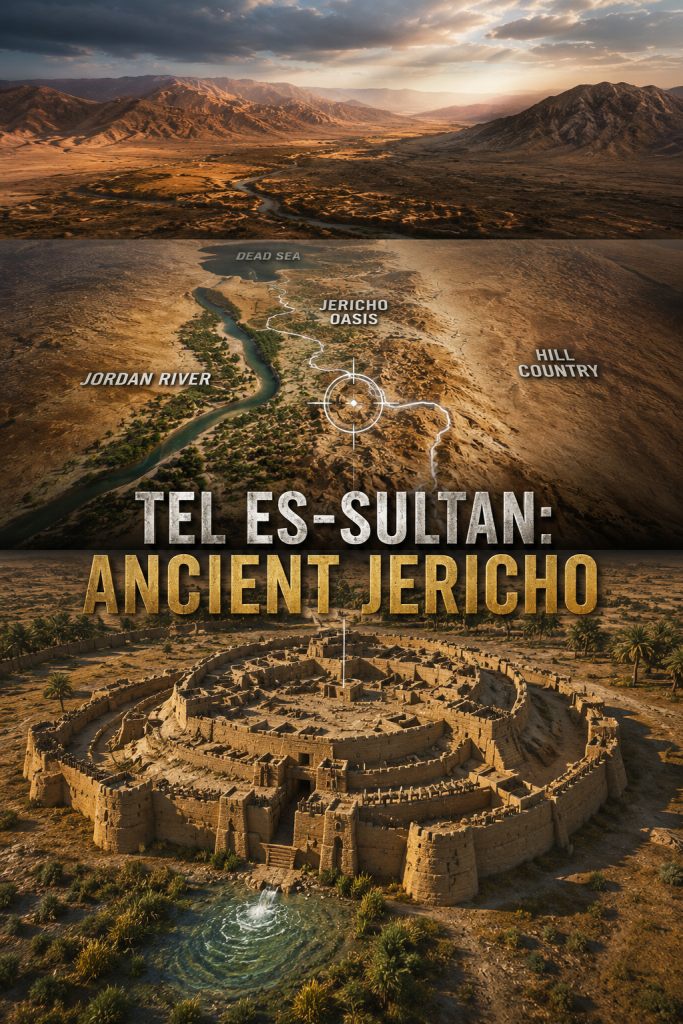
Jericho occupied one of the most strategic locations in the ancient world.
Situated near the Jordan River and approximately 800 feet below sea level, it controlled the main route into the hill country of Canaan. Any invading force crossing the Jordan River would have to deal with Jericho.
If Joshua could not take the city, the Israelite army would be trapped in the Jordan Valley with a fortified enemy behind them.
From a military perspective, Jericho had to fall.
A Fortress Designed for Defense
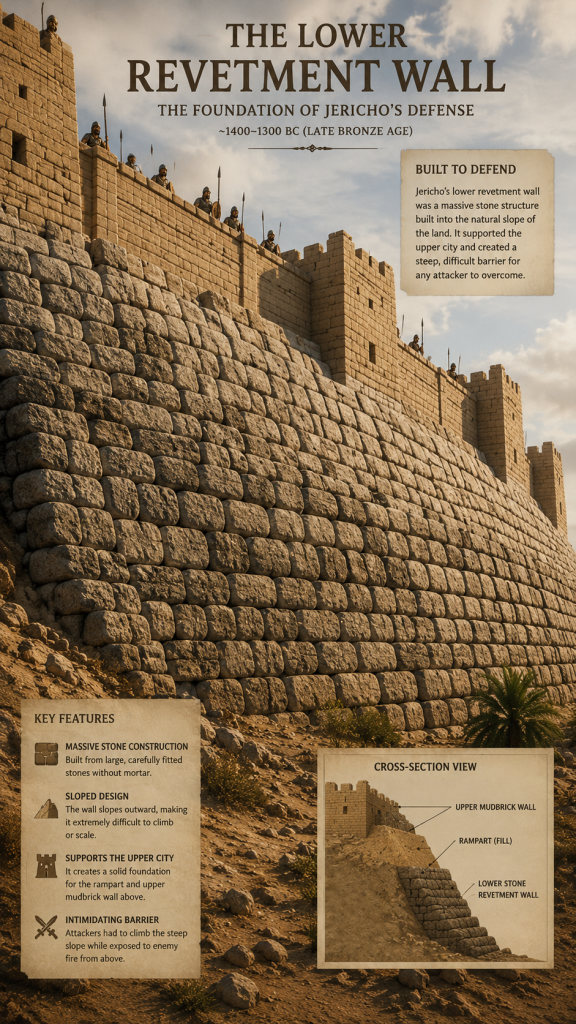
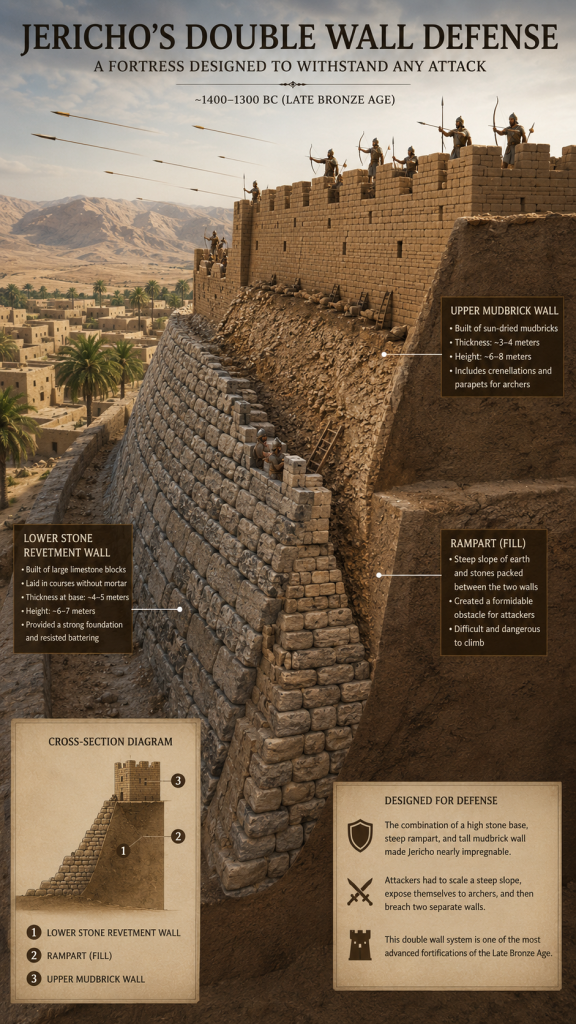
Archaeological excavations at Tell es-Sultan, the site of ancient Jericho, reveal that the city possessed an impressive fortification system.
Jericho was protected by:
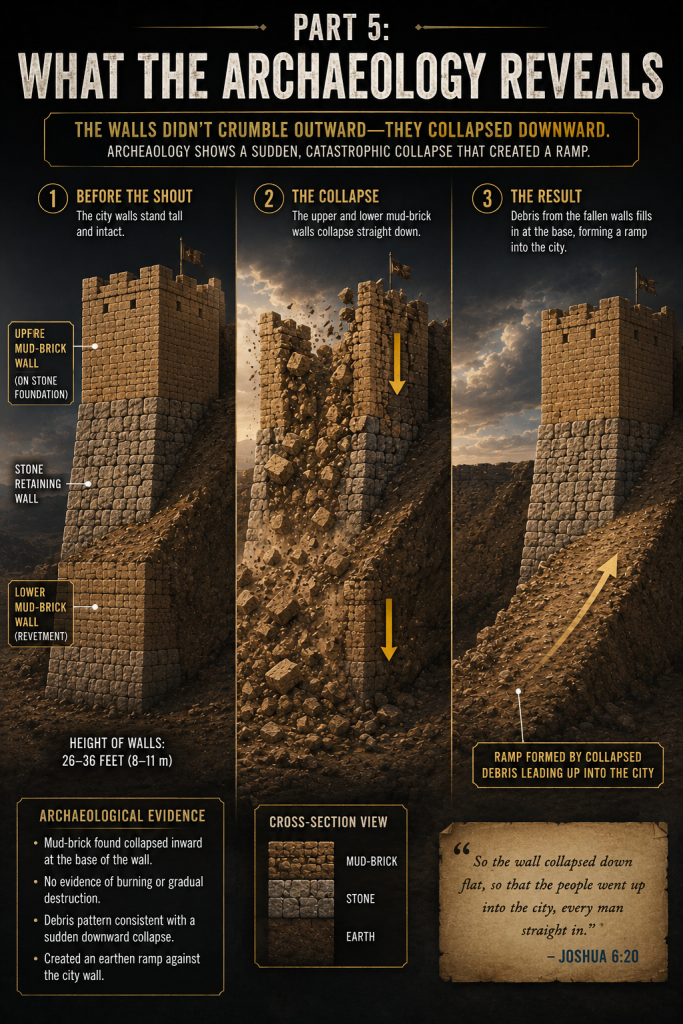
- A massive stone retaining wall.
- A steep earthen rampart.
- An upper mud-brick wall built on top of the rampart.
This created a formidable double-wall defense system.
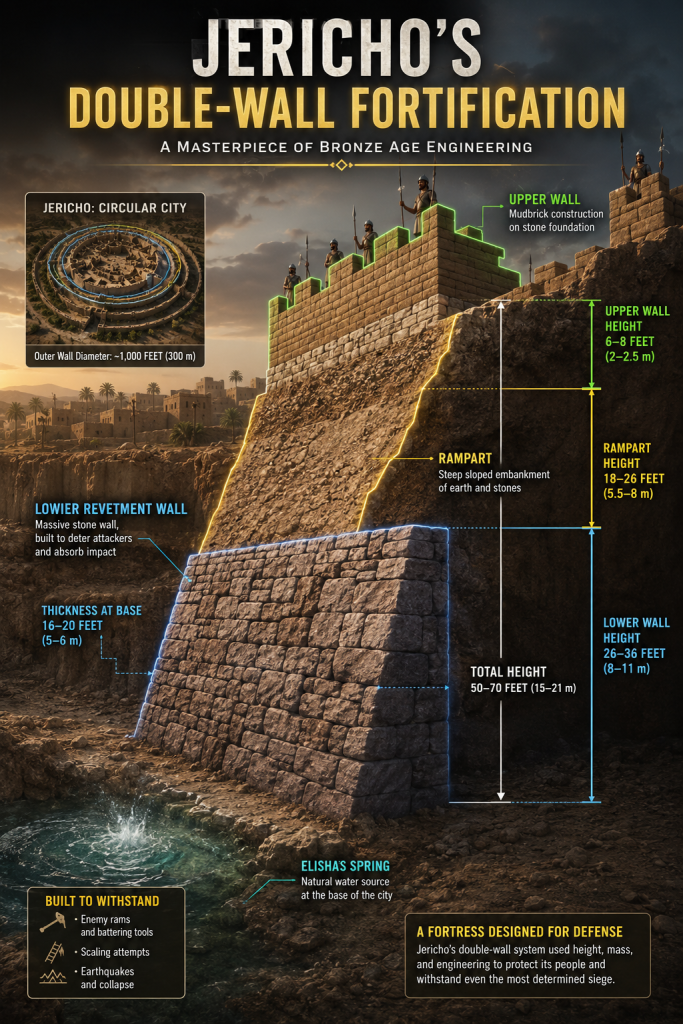
Attackers would have to climb the steep embankment while exposed to defenders positioned high above them. For ancient armies, such a fortress was a nightmare to attack.
Humanly speaking, Jericho appeared unconquerable.
God’s Unusual Strategy
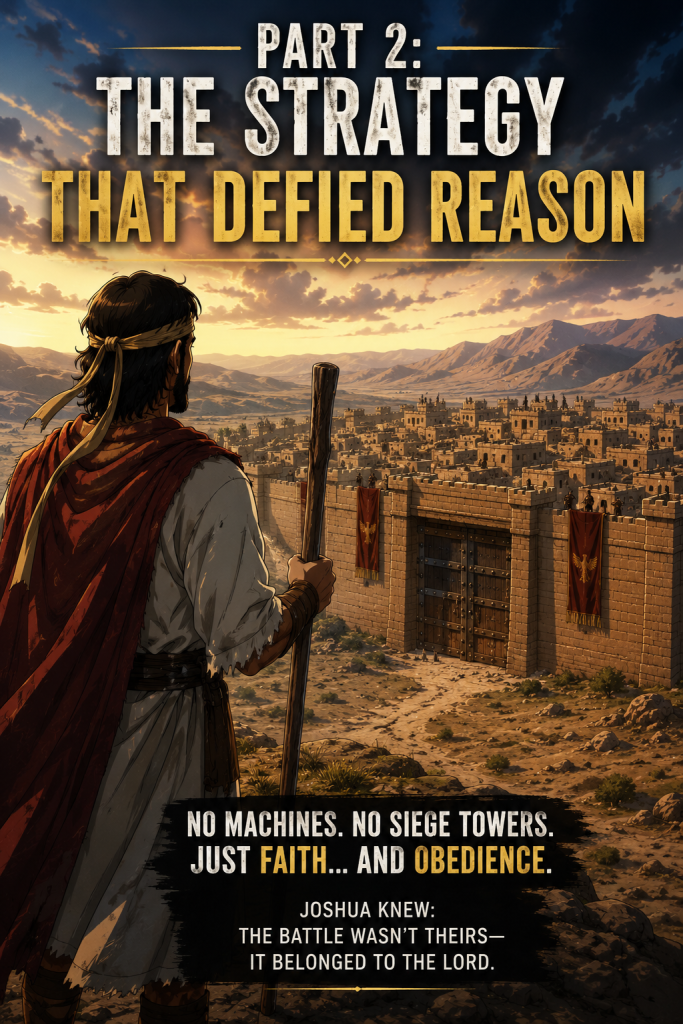
Yet God did not instruct Joshua to build siege towers.
He did not command the Israelites to batter the walls.
Instead, God gave Joshua a strategy that defied conventional military wisdom.
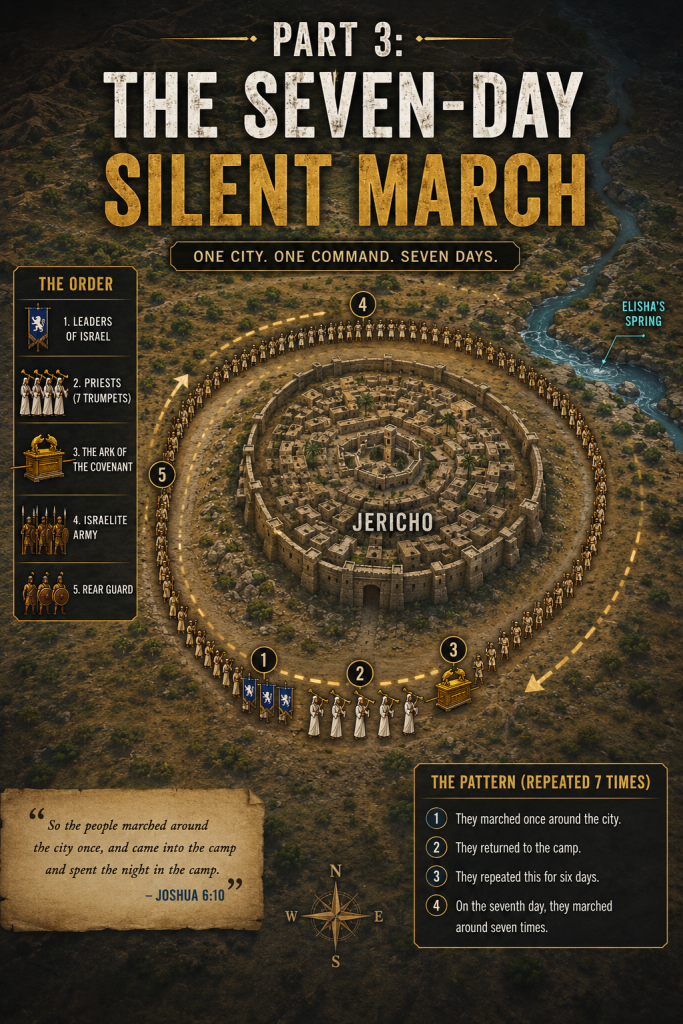
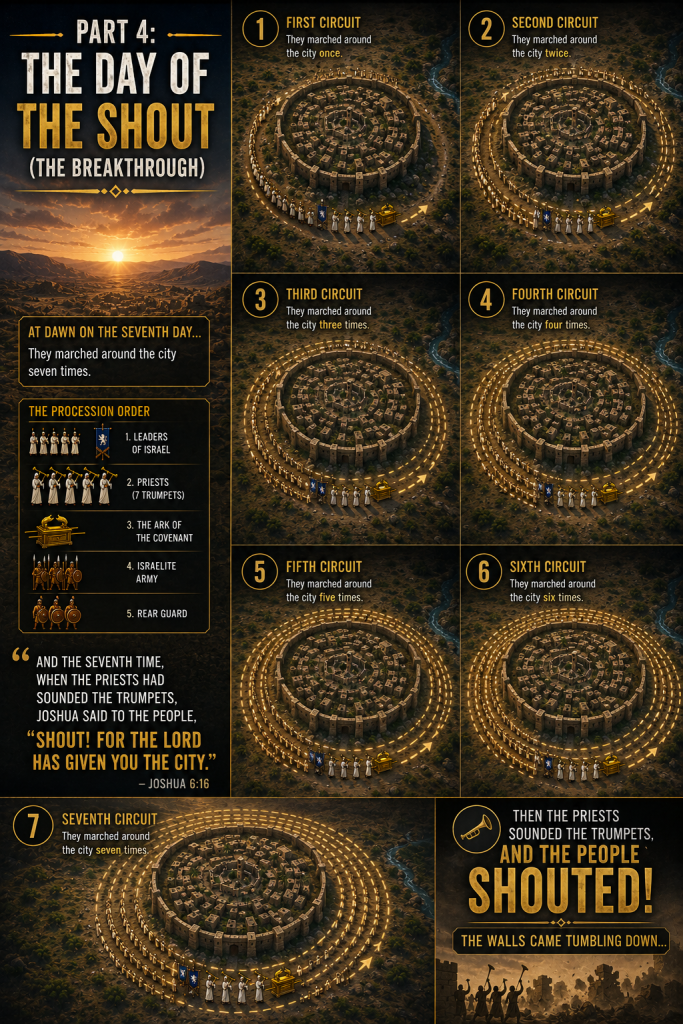
For six days, the Israelites marched around the city once each day.
The priests carried the Ark of the Covenant.
Seven priests blew trumpets.
The people remained silent.
Then, on the seventh day, they marched around the city seven times.
After the final circuit, Joshua commanded the people:
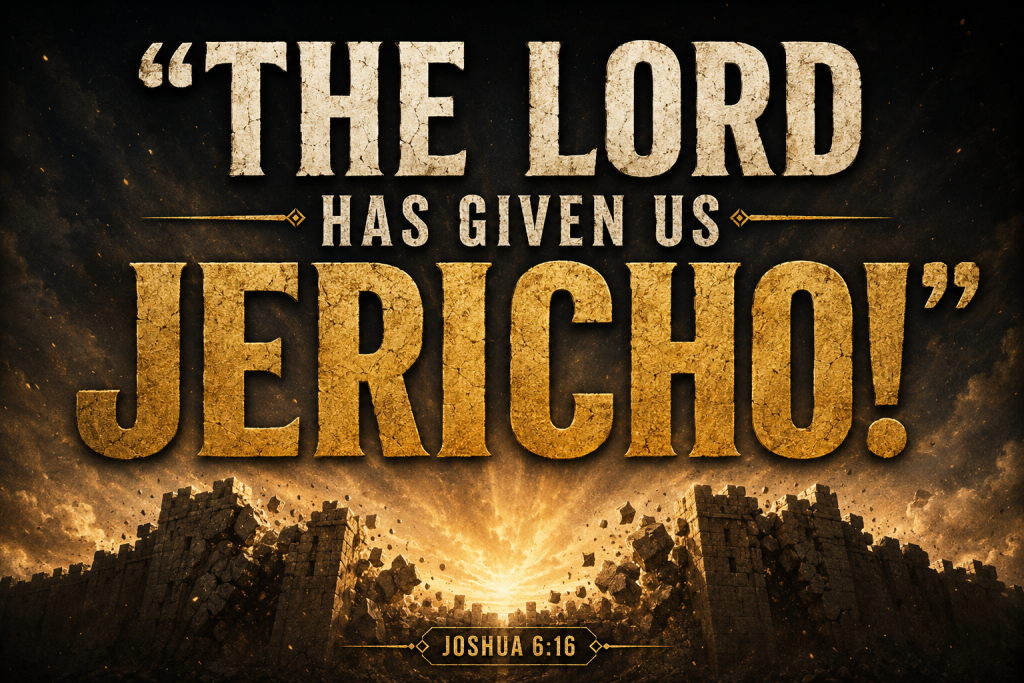
“Shout! For the Lord has given you the city!” (Joshua 6:16)
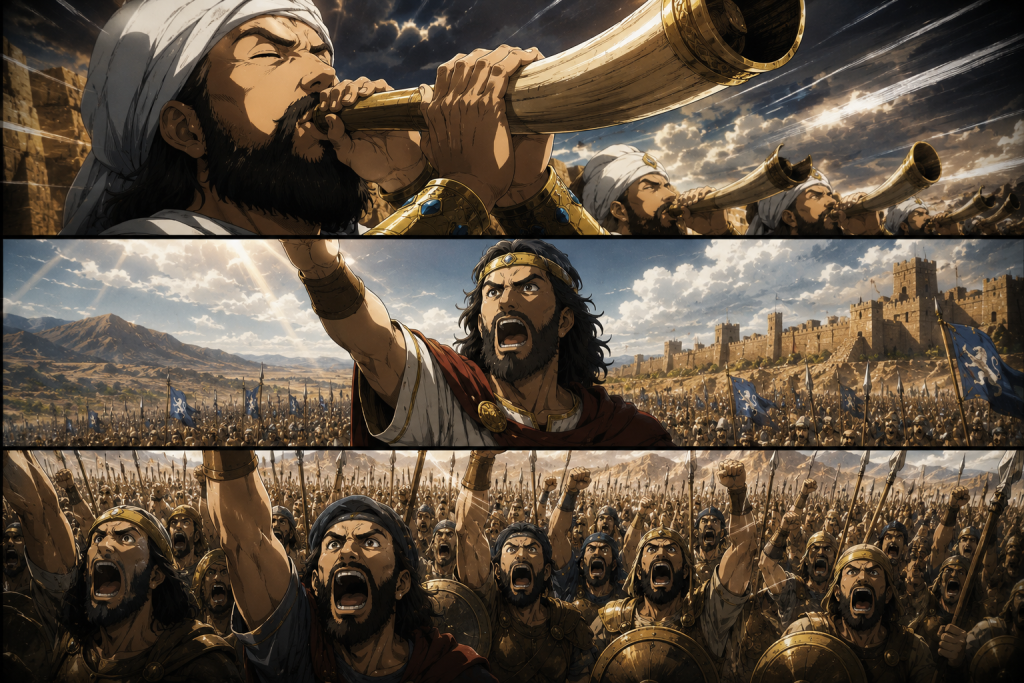
The trumpets sounded.
The people shouted.
And the walls fell.
What Archaeology Reveals
Archaeologists have discovered fascinating evidence at Jericho.
Excavations uncovered collapsed mud-brick debris at the base of the city walls. Some researchers suggest that the fallen bricks may have formed a ramp-like pathway leading upward into the city.
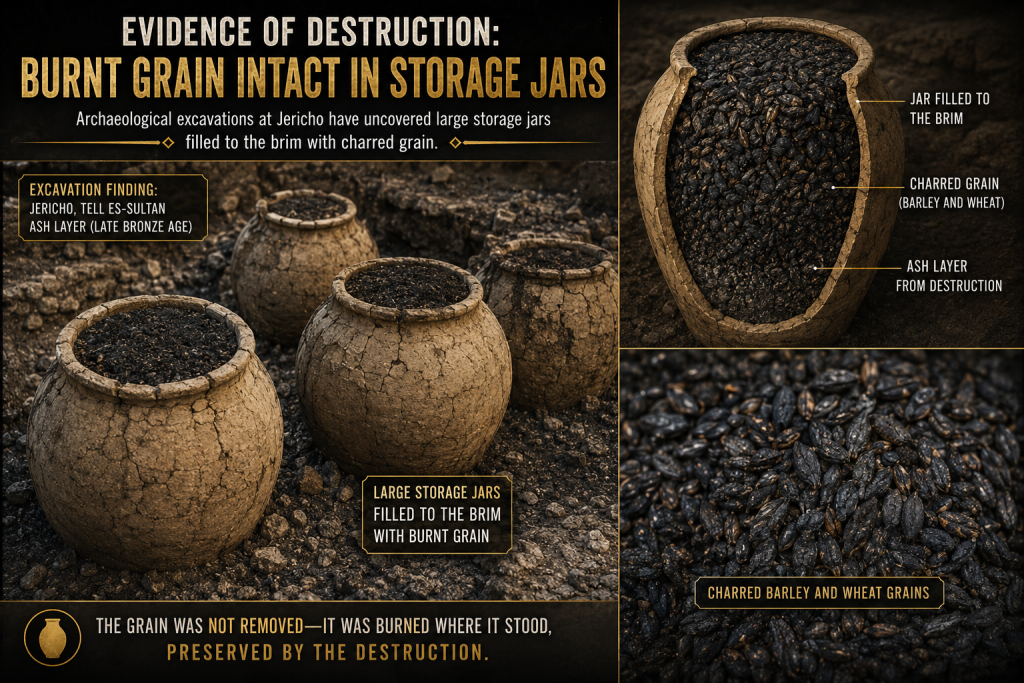
Large storage jars filled with charred grain were also discovered among the ruins.
These findings are significant.
The grain suggests that:
- The city fell shortly after harvest.
- The siege was relatively brief.
- The city was destroyed quickly before the grain could be consumed or looted.
Archaeologists also found evidence of intense burning, consistent with the biblical account that Jericho was destroyed by fire.
While scholars continue to debate various details regarding the dating and interpretation of the evidence, there is no doubt that Jericho was a heavily fortified city that experienced a catastrophic destruction.
The Greatest Lesson of Jericho
The most important lesson of Jericho is not archaeology.
It is faith.
Imagine standing before those walls.
Imagine looking at a city that seemed impossible to conquer.
Imagine hearing God’s strategy and wondering how marching around a city could possibly bring victory.
Yet Joshua obeyed.
The priests obeyed.
The people obeyed.
They trusted God even when His instructions did not make sense from a human perspective.
And that is where many of us find ourselves today.
Perhaps your Jericho is not a city wall.
Perhaps it is:
- A broken relationship.
- A financial struggle.
- A health battle.
- A family crisis.
- A fear that refuses to leave.
Like Jericho, the obstacle may appear impossible.
But the story reminds us that God specializes in overcoming what human beings cannot.
Faith Before Victory
Notice something important.
The walls did not fall on Day One.
They did not fall on Day Two.
They did not fall on Day Three.
For six days, nothing appeared to happen.
The walls remained standing.
The gates remained shut.
The situation looked exactly the same.
Yet behind the scenes, God was working.
How often do we give up because we do not see immediate results?
Jericho teaches us that obedience often comes before breakthrough.
Faith often comes before victory.
Trust often comes before understanding.
The Battle Belongs to the Lord
Jericho reminds us that God does not need human strength to accomplish His purposes.
The Israelites did not win because they possessed superior weapons.
They did not win because of military genius.
They won because God was faithful.
The same God who brought down the walls of Jericho is still at work today.
When God gives a promise, no wall is too high.
No obstacle is too strong.
No situation is beyond His power.
The battle belongs to the Lord.
Reflection Questions
- What “Jericho” are you facing in your life today?
- Are you willing to trust God even when His plan does not make sense?
- Have you given up too soon while waiting for God to work?
- What step of obedience is God asking you to take today?
Final Thought
The story of Jericho is not ultimately about falling walls.
It is about a faithful God.
A God who keeps His promises.
A God who works in ways we do not always understand.
And a God who still makes a way where there seems to be no way.
“By faith the walls of Jericho fell, after the army had marched around them for seven days.” — Hebrews 11:30
May we have the same faith, obedience, and trust in the God who never fails.
— Florilyn Barnhart